China, First Read
China, First Read
中国战略要闻
Strategic intelligence on China, read between the news
$7bn Oracle’s AI chip lease for Tencent, reportedly cancelled |
2.8tn Parameters in Moonshot’s open-weight Kimi K3.1 Pro |
Rmb404.7bn Huafa Group’s interest-bearing debt |
−4% Hang Seng AI index by Friday’s midday break |
- Truce paperwork races the November 10 deadline
- Oracle drops a $7bn AI chip lease for Tencent
- China’s top AI labs move onto Huawei silicon
- AI rout hits Chinese tech; the PBoC pledges support
- Zhuhai props up Huafa, a city-owned giant
- China ratifies its global AI body
- Envision’s wind-powered AI campus
- Meta builds its humanoid with Shanghai’s Fourier
- Brussels clears JD.com’s Ceconomy takeover, with strings
- Hong Kong pitches to the Global South
01 · Geoeconomics · US-China
Washington formalises the truce extension as Beijing’s rare-earth pause nears its legal deadline

A container ship and cranes at a port. Photo: Albert Stoynov / Unsplash
The US Commerce Department’s Bureau of Industry and Security released a rule on Thursday extending its suspension of the “affiliates rule” to January 10 2027, according to a Baker McKenzie client note. The rule, which would extend Entity List restrictions to companies 50 per cent or more owned by listed parties, was otherwise due to return on November 10. It is suspended, not withdrawn.
Beijing’s matching step is still outstanding. China’s suspension of six October 2025 export-control announcements, covering rare earths, lithium batteries, graphite anode materials and superhard materials, runs to November 10. Compliance trackers reported no published Chinese legal notice extending it as of early November, although the commerce ministry said on September 28 that the two sides had agreed to extend the Kuala Lumpur arrangement to January 10. US exclusions from Section 301 tariffs on some machinery and solar equipment, and the suspension of port fees on Chinese-linked ships, lapse on November 9; USTR has proposed extending the port-fee pause to January 9, Venn Strategies said.
What to watch
The truce is now renewed in two-month increments, which makes January 10 the next cliff for supply chains. Companies that depend on Chinese rare earths, magnets or battery materials should check for a commerce ministry notice before Tuesday, and keep ownership-based screening ready in case the affiliates rule returns in January.
Sources: Baker McKenzie · Venn Strategies · THG News · Environment+Energy Leader
02 · AI compute · US-China
Oracle drops a $7bn plan to rent AI chips to Tencent under US pressure, the FT reports

A data-centre server aisle. Photo: İsmail Enes Ayhan / Unsplash
Oracle has cancelled a five-year agreement worth about $7bn to lease advanced AI chips to Tencent from data centres in Southeast Asia, the Financial Times reported on Wednesday, according to TechNode. The arrangement would have given Tencent access to around 100,000 advanced AI chips. The FT said the cancellation followed pressure from the Trump administration, whose officials raised concerns with Oracle. Reuters said it could not verify the report, and Oracle, Tencent and the White House did not comment.
Beijing pushed from the other side. Senior officials in Guangdong, where Tencent is based, visited the company and asked it to support Chinese chips, the FT reported. Sina’s technology hotlist on Friday noted that Tencent had still not responded.
What to watch
Leasing capacity in third countries has been one of the last routes for Chinese firms to use frontier American chips, and Washington is now closing it by leaning on cloud providers rather than by rule. Providers with Asian capacity should expect scrutiny of Chinese tenants; Chinese AI timelines now depend on Huawei’s output.
Sources: TechNode (citing the FT) · Sina tech hotlist
03 · AI & chips
China’s leading AI labs move onto Huawei silicon

Network cabling in a data centre. Photo: Taylor Vick / Unsplash
DeepSeek plans to train its next-generation V5 model on Huawei’s Ascend chips, STAR Market Daily reported on Tuesday, citing multiple industry sources, according to TechNode. Ascend chips have so far mainly run inference for DeepSeek’s models; training is far more compute-intensive. Neither DeepSeek nor Huawei has confirmed the plan.
Moonshot AI this week published the weights of Kimi K3.1 Pro, its flagship multimodal model, on Hugging Face. The mixture-of-experts model has 2.8tn parameters, about 104bn of them active per inference, and a context window of about 1mn tokens, TechNode reported. Huawei announced inference support for it on its Atlas A3 and Ascend 950 systems.
What to watch
If a frontier Chinese model is trained end to end on domestic chips, US export controls lose much of their bite at the model layer. Open weights paired with Huawei hardware offer the Global South a complete non-American AI stack; western governments should expect it to compete for public-sector and telecoms deployments.
Sources: TechNode (DeepSeek) · TechNode (Kimi)
04 · Capital markets · AI
Global AI rout hits Chinese tech stocks as the PBoC promises to steady markets

A computer processor. Photo: Brian Kostiuk / Unsplash
Chinese and Hong Kong shares fell on Friday as a Nasdaq-led technology sell-off spread across Asia, according to a market report carried by Business Recorder. By the midday break the CSI 300 was down 1.5 per cent and the Shanghai Composite 1.1 per cent; the Star 50 and a mainland AI index each fell as much as 5 per cent, and the Hang Seng AI index lost 4 per cent. Optical-module maker Zhongji Innolight dropped 8 per cent to a one-year low and AI developer Zhipu fell as much as 15.4 per cent.
The rout followed the Nasdaq’s steepest one-day fall since April 2025, amid fears that a Democratic Congress will tighten scrutiny of AI. PBoC governor Pan Gongsheng pledged more support for markets in a report to lawmakers on the State Council’s financial work, including backing for state investor Central Huijin as a market stabiliser, wider channels for long-term investment and better stabilisation mechanisms, Caixin reported. China “can’t completely escape the fallout from Wall Street”, said Dilin Wu of Pepperstone, though she argued that chipmakers such as Huawei and Cambricon are driven mainly by the push for self-reliance.
What to watch
China’s AI trade is splitting in two: suppliers of optical modules to US data centres ride the American capex cycle, while domestic chip champions trade on policy. A state buyer of last resort limits drawdowns but does not create earnings; boards should treat Central Huijin as a floor under valuations, not a catalyst.
Sources: Business Recorder · Caixin
05 · Macro · Local-government debt
Zhuhai throws Rmb40bn at Huafa as a city-owned conglomerate tests the limits of local support

The Shanghai skyline and Huangpu River, where Huafa expanded after 2012. Photo: Denys Nevozhai / Unsplash
Zhuhai has mobilised more than Rmb40bn to support Zhuhai Huafa Group, its largest city-owned company, and pledged nearly Rmb70bn more, Caixin reported, citing the 21st Century Business Herald. Huafa has more than Rmb750bn of assets and Rmb404.7bn of interest-bearing debt. Reports of overdue payments on non-standard financing surfaced on October 26; by October 30 the selling had spread to government bonds, and several long-dated Huafa bonds fell more than 20 per cent on November 2–3, triggering trading halts.
At the end of June Huafa held about Rmb50.1bn of unrestricted cash against more than Rmb154.1bn of debt due within a year, a coverage ratio of 0.32 times. Its interest-bearing debt is about 8.2 times Zhuhai’s 2025 general budget revenue of Rmb49.41bn, and the city’s government-fund revenue has fallen more than 90 per cent from 2021. China Lianhe kept Huafa’s AAA rating but put it on negative watch on November 4. The city aims to protect publicly traded debt while restructuring the maturities and rates of non-standard obligations.
What to watch
Huafa shows where China’s next debt stress lies: not in classic financing vehicles but in diversified city-owned conglomerates with property exposure. Protecting bonds while squeezing shadow lenders keeps market access open but shifts losses to trusts and banks; watch whether Guangdong province has to step in.
Sources: Caixin
06 · AI governance · Law
China ratifies its global AI body and passes a law to pursue graft across borders

The Great Hall of the People in Beijing. Photo: Dominic Kurniawan Suryaputra / Unsplash
The NPC Standing Committee on Friday approved the agreement establishing the World Artificial Intelligence Cooperation Organization, the multilateral AI body Beijing has championed, Hong Kong’s on.cc reported as the session closed. Lawmakers passed 15 laws and decisions, The Paper reported, including an Anti-Cross-Border Corruption Law of 47 articles that Xinhua said aims to punish graft that crosses borders, deepen international co-operation and “safeguard China’s sovereignty, security and development interests”.
Other new laws cover procuratorial public-interest litigation, water resources and Antarctic activities; the Antarctic law takes effect on January 1 2027, Xinhua said. Lawmakers also removed Li Lecheng as minister of industry and information technology. He became party secretary of Anhui province in September, according to on.cc, so the ministry that runs industrial and chip policy now needs a new head.
What to watch
Ratification turns WAICO from a diplomatic proposal into a treaty body that Beijing will use to shape AI standards across the Global South; on Wednesday Wang Yi invited Mekong states to join. The cross-border corruption law gives Beijing a statutory basis to pursue people and assets abroad, so multinationals should review their China-facing compliance programmes once the text is published.
Sources: on.cc · The Paper · Xinhua (corruption law) · Xinhua (Antarctic law)
07 · Advanced energy · Compute
Envision bets that wind-powered AI campuses can beat the grid

High-voltage transmission lines. Photo: Fré Sonneveld / Unsplash
Envision Group has handed the first 200MW phase of its Galaxy Campus AI data centre in Ulanqab, Inner Mongolia, to a Chinese internet company, Caixin reported. A company-built wind farm more than 100km away will meet about 80 per cent of the campus’s demand, backed by three layers of storage: four hours at the wind farm, 30 minutes on site and a millisecond-response system beside the GPUs. A second 200MW phase is due to start in the second quarter of 2027.
Industrial power in Ulanqab costs about Rmb0.32–0.35 per kWh, and the site is a little over 200km from Beijing, which keeps network latency low, Caixin said. Envision uses AI models to forecast wind output and GPU demand 15 minutes ahead and expects curtailment below 10 per cent. Caixin calls the project an early test of a policy-backed model that connects renewable generators directly to computing facilities.
What to watch
Power is becoming as binding a constraint on AI as chips, and China is building a direct-supply model that pairs cheap northern wind with compute. If it scales, Chinese AI firms gain a durable cost advantage in inference; western operators and utilities should study the direct-connection rules.
Sources: Caixin
08 · Robotics · Supply chains
Meta turns to Shanghai’s Fourier to build its humanoid robot
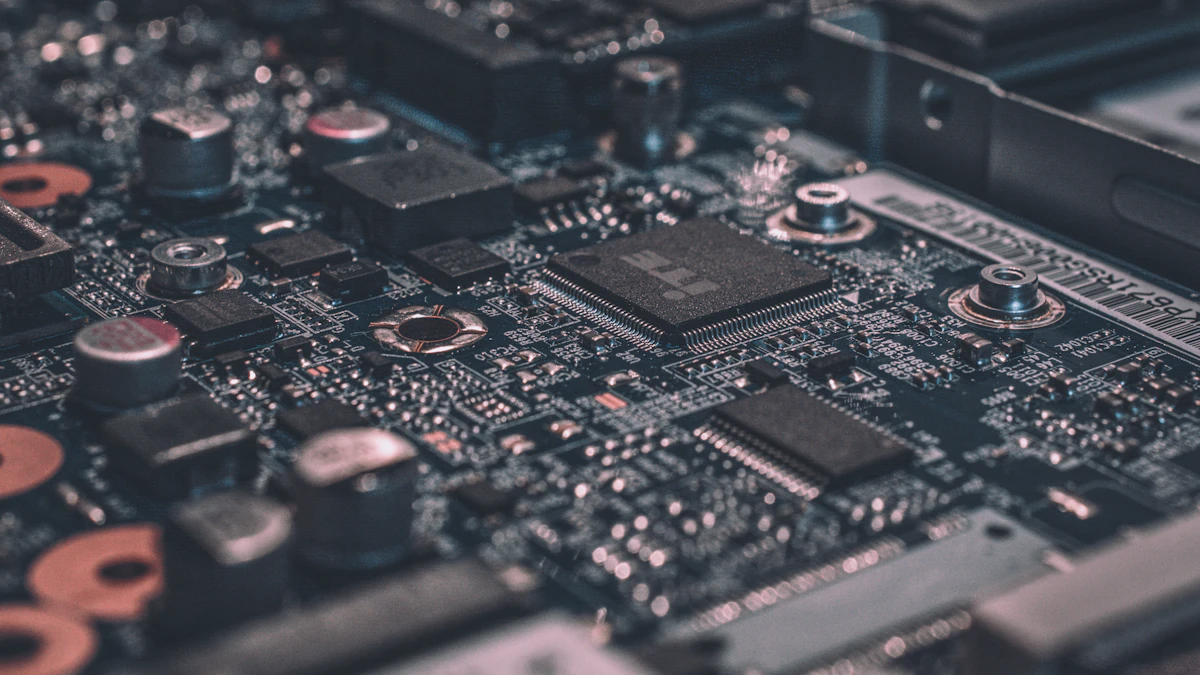
A circuit board. Photo: Alexandre Debiève / Unsplash
Meta is working with Shanghai-based Fourier to build “Max”, a humanoid about 1.5 metres tall and weighing 48kg, TechNode reported, citing The Information. The companies built a first version in about three months and began work on Max 2 in September; Meta’s robotics product vice-president, Li-Chen Miller, spent nearly two months at Fourier’s Shanghai factory. The robot runs on Nvidia’s Jetson Thor and is “not currently intended for sale”.
Meta said US suppliers struggle to source some components domestically, and Fourier built the custom prototype inside China’s robotics supply chain. Founded in 2015 as a maker of rehabilitation robots, Fourier shipped about 300 humanoids in 2025, sixth in the world, according to Omdia, and raised money in 2025 at a pre-money valuation of Rmb8bn.
What to watch
America’s largest AI companies now depend on Chinese supply chains to give their models physical bodies, as they once did for phones. Expect Washington to scrutinise humanoid components as it does drones, and Beijing to treat robotics as strategic leverage, as its veto of SoftBank’s purchase of ABB’s China robotics arm showed this week.
Sources: TechNode
09 · Geoeconomics · Europe
Brussels clears JD.com’s $2.5bn takeover of Ceconomy, with subsidy strings attached

Containers stacked at the port of Hong Kong. Photo: Timelab / Unsplash
The European Commission on Tuesday gave conditional approval to JD.com’s acquisition of Ceconomy, the German owner of the MediaMarkt and Saturn electronics chains, after a review under the EU’s Foreign Subsidies Regulation prompted by concerns about possible Chinese state support, TechNode reported, citing Reuters. JD.com aims to close the roughly $2.5bn deal by November 12.
JD.com must deal with Ceconomy, including on financing, “on market terms”, and must give third-party retailers the same access to its warehousing and logistics services that Ceconomy receives. The conditions are meant to stop cross-subsidies to JD.com’s European operations.
What to watch
Brussels is managing Chinese acquisitions with behavioural conditions rather than vetoes, even as it prepares a trade “kill-switch”. The case sets the template for Chinese buyers of European consumer and logistics assets: sellers should expect conditions on financing and platform access, and a Chinese owner inside Europe’s largest electronics retailer.
Sources: TechNode (citing Reuters)
10 · Capital markets · Hong Kong
Hong Kong pitches itself as the Global South’s capital market

Shanghai’s Lujiazui financial district. Photo: Freeman Zhou / Unsplash
Hong Kong could become a financing centre for the Global South within five to ten years, King Leung, assistant director-general of InvestHK, told Caixin at Hong Kong FinTech Week, as China deepens trade and investment ties with Southeast Asia, Central Asia and Africa. The city raised HK$388bn ($49.4bn) through IPOs in the first nine months of 2026, Caixin said.
Private wealth is growing as fast. Assets under management rose 24 per cent to HK$12.945tn ($1.6tn) at the end of 2025, according to a report by the Private Wealth Management Association and KPMG China released on Thursday, and 91 per cent of surveyed institutions want individual professional investors allowed to trade on the mainland’s Star and ChiNext boards, Caixin reported.
What to watch
Hong Kong is repositioning from a gateway between China and the West to a hub between China and the Global South, which reduces its dependence on western listings. Issuers from ASEAN, Central Asia and the Gulf will find a deepening pool of mainland capital there; a wider Wealth Management Connect quota would be the signal of Beijing’s backing.
Sources: Caixin (Global South) · Caixin (wealth)
|
The calendar ahead Dates boards should hold | ||||||||||||||||
|
ACME Macro Advisory
Method: stories are selected for strategic, forward-looking relevance and read first through Chinese official and financial media (Xinhua, the foreign ministry, Caixin, CGTN), then checked against international reporting. Chinese state media framing is reported as such. Figures are as published by the cited sources.